Segregated funds and mutual funds: what the insurance guarantee costs


Comparing segregated funds vs mutual funds starts with the rights attached to the investment. Two funds can invest in similar shares and bonds while giving their owners different rights. A mutual fund is an investment product. A segregated fund is held through an insurance contract, with maturity and death-benefit guarantees defined by that contract. Both can lose market value.[1]
The insurance features can be useful, but they come with conditions and costs. Comparing the name of one product with the advertised return of another leaves out much of what a buyer needs to know.
Compare the investments before comparing returns
A Canadian equity fund and a conservative bond fund face different risks, regardless of whether either sits inside an insurance contract. Start with the asset mix, concentration, risk rating and intended holding period. Then compare performance over the same dates and on the same fee basis.[1]
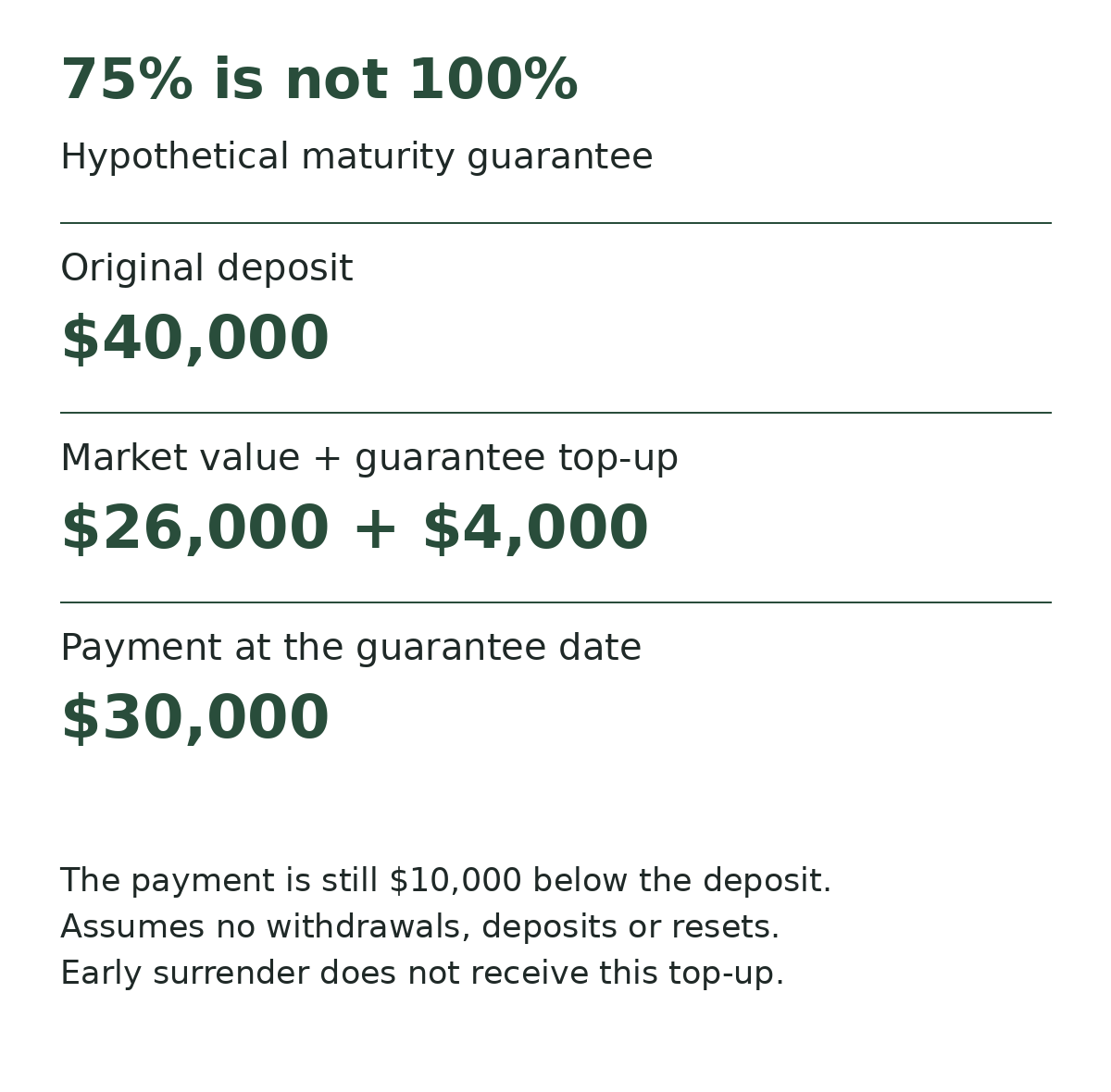
A segregated fund’s maturity guarantee does not promise a positive annual return. A 75% guarantee can still leave the owner with a loss at the applicable maturity date. Selling before that date ordinarily means receiving market value, subject to applicable charges, without a maturity top-up.[1]
Hypothetical example: a person deposits $40,000 into a contract with a 75% maturity guarantee. Assume no later deposits, resets or withdrawals. The guarantee is $30,000. If the market value is $26,000 at the applicable maturity date, a $4,000 top-up brings the payment to $30,000. That remains $10,000 below the original deposit. If the owner instead surrenders early at $26,000, the maturity guarantee does not bring the surrender payment to $30,000.
Why can segregated funds cost more than mutual funds?
The management expense ratio describes ongoing fund expenses. Insurance guarantees can add costs; other contract and transaction charges may also apply. Ask for the full cost of the actual fund series and guarantee option, including the advisor’s compensation arrangement. A higher fee needs to be considered alongside the specific feature it purchases.[1]
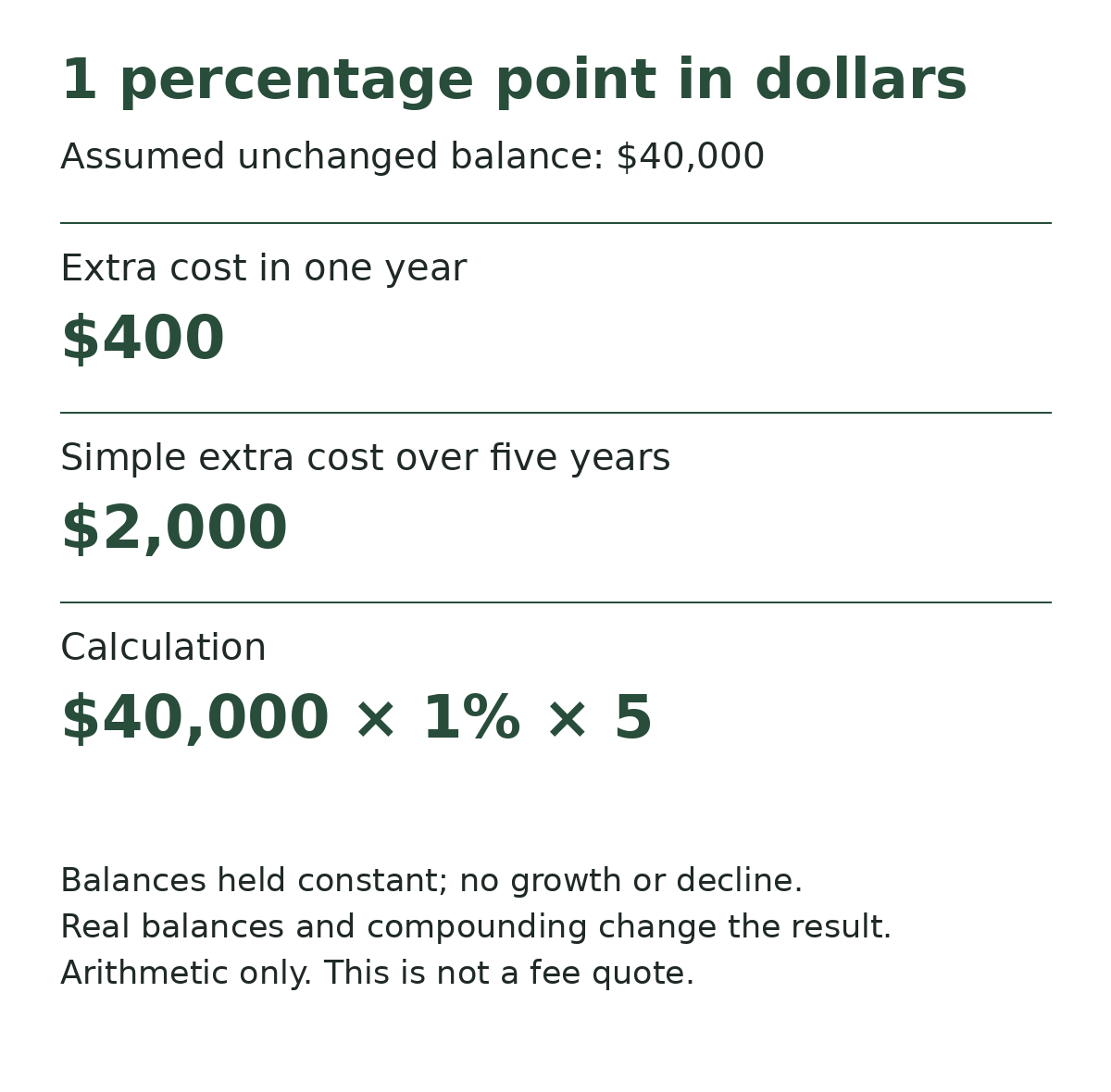
Hypothetical fee illustration: on an unchanged $40,000 balance, a one-percentage-point annual cost difference is approximately $400 for that year. This is arithmetic using an assumed fee difference, not a quote for either product. Over time, changing balances and compounding affect the result. Actual MER expenses are reflected in fund values rather than necessarily appearing as a separate $400 bill.
An Ontario rule also changes what sellers can offer: insurers and agents have been prohibited from issuing and selling new individual segregated fund contracts with deferred sales charges since June 1, 2023. That does not establish that every older contract is free of charges. Obtain a current surrender quote for an existing holding.[2]
Beneficiaries and creditors need a separate review
An insurance contract can name a beneficiary for the death benefit. Depending on the designation and circumstances, proceeds may pass directly to that beneficiary. Potential creditor protection has conditions involving the contract, designation and applicable law. It should never be presented as a promise that money is beyond every creditor’s reach.[1]
The annuitant is the person whose death triggers the contractual death benefit. That person may also be the owner, but the two roles are distinct. A buyer should know whose life the contract covers and who receives the proceeds before treating the arrangement as part of an estate plan.
Segregated funds vs mutual funds: is either always better?
Neither label establishes a better outcome. A segregated fund adds contractual insurance guarantees to a market-based investment, usually at a higher fee. Whether those features matter depends on the guarantee date, the investor’s need for access and the actual cost. The same asset mix can lose value in either structure; insurance does not remove that investment risk.[1]
A comparison that shows only past returns leaves out the circumstances in which the guarantee would pay. The companion explanation of segregated fund guarantees follows that distinction through withdrawals and resets.
Are segregated funds locked in?
Do not confuse an investment’s maturity-guarantee date with a legal ban on withdrawing money. Individual segregated funds may allow redemption before maturity, but the amount available, fees and effect on guarantees come from the contract. An early withdrawal can therefore be possible while still being financially different from holding to the guarantee date.
For segregated funds, ask the insurer for the actual surrender value on a stated date and the guarantee values that would remain afterwards. A fund’s market value is not necessarily the amount that will reach your bank account after charges or tax. The AMF’s consumer explanation of segregated funds distinguishes early redemption from payment under a maturity guarantee. The insurance label alone does not make an investment readily available without consequences.
What should Fund Facts show about segregated funds and mutual funds?
For a mutual fund, Fund Facts brings key information into a short document for the particular class or series: investment mix, risk, past performance, expenses and other costs. When reviewing segregated funds alongside mutual funds, make sure each document matches the investment actually being offered. Two series carrying the same fund name can have different fee arrangements.
The Ontario Securities Commission’s investor-education site explains that the published fund returns in this document are after fund expenses. That matters when checking a comparison: subtracting the same expenses again would understate the result. Conversely, a separately charged account or advisory fee may still need attention. Use Understanding Fund Facts to identify what is included, then ask for any additional costs to be shown separately.
How do you compare fees on segregated funds without double-counting?
Separate ongoing fund expenses from charges for a transaction or service. The MER is an annual percentage reflecting fund expenses; a short-term trading charge or another account-level fee is a different item. A comparison should identify both the percentage and the dollars involved, together with the period and balance assumed.
For both segregated funds and mutual funds, ask which costs are already reflected in the quoted return and which are paid separately. Record whether a fee is ongoing, triggered by a withdrawal, or connected with the advisor’s service. Do not conclude that a smaller MER means a smaller total cost without checking the rest. The Canadian Securities Administrators’ fee overview explains why investment fees need more than a single number.
What does the extra fee mean over several years?
Extend the earlier hypothetical example without treating it as a forecast. If an unchanged $40,000 balance incurred an extra one percentage point of cost in each of five years, the simple total would be $2,000: $400 multiplied by five. This illustration deliberately assumes no market growth, decline, deposits or withdrawals.
The value of segregated funds will not usually stay at exactly $40,000, and fees deducted along the way also affect the amount remaining to earn future returns. The arithmetic is a way to expose an assumption, not an estimate of what a particular contract will charge. Request the fee illustration for the actual series and insurance option. The OSC’s mutual-fund fee explanation can help distinguish management expenses from other charges.
How can withdrawals reduce guarantees on segregated funds?
For segregated funds, the contract’s calculation matters. Consider a hypothetical contract that reduces its guarantee in proportion to the units withdrawn. Assume its current market value is $50,000 and its guarantee base is $30,000. A $10,000 withdrawal removes 20% of the market value. Under that assumed proportional rule, the guarantee falls by 20%, from $30,000 to $24,000.
That calculation is not a rule for every contract. It shows why deducting the cash withdrawal from a guarantee base without reading the clause can give a wrong answer. Obtain the insurer’s calculation before relying on a remaining guarantee. The AMF’s Quebec contract-disclosure guideline calls for disclosure of withdrawal effects and guarantee conditions. For a contract elsewhere, use its applicable disclosure and wording.

Do resets always improve guarantees on segregated funds?
A reset can lock in a higher guarantee basis after market growth, but it can also move the maturity date farther away. With segregated funds, a larger future guarantee and an earlier accessible guarantee are different features. Comparing only the dollar amount after a reset can hide the time needed to receive it.
Check whether the reset applies to the maturity guarantee, death benefit or both; whether it is automatic or requested; and whether fees, age limits or a new guarantee period apply. The AMF’s French-language explanation of resets illustrates the relationship between the guarantee amount and its date. A reset is a contract feature to examine, not a promise of a better overall outcome.
What belongs in a comparison of segregated funds?
Put the exact fund name and series, asset mix, risk rating and comparison dates beside the fees. For segregated funds, add the maturity date, guarantee percentages, current guarantee bases, annuitant, beneficiary designation and withdrawal/reset calculations. Ask which figures are guaranteed and which depend on future market values.
For segregated funds and mutual funds, test the same practical question: what happens if the money is needed earlier than planned? The answers should describe access and costs in dollars using clearly stated assumptions. A comparison should also explain the advisor’s role and compensation. The OSC’s questions for mutual-fund buyers provides a starting point for examining the investment side. The insurance features still require the contract itself.
Do guarantees on segregated funds determine the account’s tax rules?
No. A tax arrangement and an investment contract answer different questions. An account may have contribution limits and withdrawal-tax rules while the investment held in it has fees, market risk and separate contractual conditions. A tax deduction does not establish an investment guarantee, and an insurance guarantee does not establish that a withdrawal is tax-free.
Our TFSA, RRSP and FHSA comparison separates contribution room from withdrawal treatment. Confirm that the particular investment can be held in the intended account and examine the consequences of moving it. Neither the insurance label nor a registered-account label replaces that review.
Who is the owner, the annuitant and the beneficiary?
These names describe different roles, even when one person fills more than one of them. The owner holds the contract. The annuitant is the person whose life determines the relevant insured event. The beneficiary designation identifies who is to receive the applicable death benefit. Do not assume that naming someone as a beneficiary makes that person the owner or gives them the owner’s decision-making authority.
For segregated funds, read these fields alongside the benefit clauses. Whose death triggers payment? Which guarantee applies then? Is the designation current? Have ownership, family responsibilities or the intended recipient changed since the contract was issued? Ask the insurer to explain the effect of the actual arrangement before treating it as an estate-planning solution. FSRA’s contract-reporting explanation distinguishes ownership, the annuitant and the beneficiary. The tax and legal consequences still need a separate review.
What should you ask before moving an existing holding?
A comparison for new money is different from a decision about an existing contract. For segregated funds already held, obtain the issue date, current market value, surrender quote, current guarantee bases and the dates on which the guarantees apply. Those records describe the position you have now. An illustration for a new arrangement does not describe what would be given up by leaving the old one.
Ask whether the proposed movement is a fund switch within the same contract, a transfer, or a surrender followed by a new purchase. Have the insurer identify the effects on guarantees, fees and access to money in writing. Check any registered-account transfer requirements separately. Do not assume that keeping a similar portfolio preserves the same insurance rights. The important question is what survives the transaction under the actual contract, not whether the two investments have similar names.
How do you test a guarantee against an earlier spending date?
Consider a hypothetical person comparing segregated funds for money expected to be needed in five years. Assume the proposed maturity guarantee applies in ten years. The five-year date and the ten-year date answer different questions. The maturity floor cannot be treated as the guaranteed amount available for the earlier purchase.
Write down the expected spending date and ask what a withdrawal on that date would mean. Would market value determine the payment? What charges would apply? What guarantee would remain after a partial withdrawal? Repeat the exercise if the spending date changes. This does not decide which investment is suitable. It identifies information a comparison needs before a distant guarantee can be described as protection for a nearer obligation.
Put the guarantee date beside your own deadline
A guarantee payable at a distant maturity date may offer little help with a purchase five years away. Withdrawals can also reduce guarantees, and a reset can change their timing. Ask for a written comparison showing the actual maturity date, death-benefit basis, withdrawal calculation and total fees.
The useful comparison is between specific arrangements for the same purpose. A suitability review also needs your liquidity needs, other assets and tolerance for losses. A guarantee percentage alone cannot answer those questions.
Which rules are provincial when comparing segregated funds and mutual funds?
The guarantee is part of the insurance contract. The percentage, maturity date, reset rights and withdrawal calculation need to come from that contract wherever the owner lives. Provincial rules also govern insurance distribution and consumer protection. The CCIR/CISRO consolidated segregated-funds guidance sets out national regulatory expectations while recognizing applicable local law.
| Jurisdiction | Deferred sales charges on new contracts |
|---|---|
| Ontario | FSRA’s ban on issuing and selling new individual segregated-fund contracts with DSCs took effect June 1, 2023. The cited Ontario rule is an Ontario rule, not legislation for every province. |
| Quebec | The AMF’s consumer guidance explains that DSCs are prohibited for contracts entered into on or after June 1, 2023. |
| British Columbia | BCFSA instructed authorized insurers to stop issuing individual variable insurance contracts subject to DSCs from June 1, 2023. |
| Alberta, Manitoba, New Brunswick, Newfoundland and Labrador, Nova Scotia, Prince Edward Island, Saskatchewan, Northwest Territories, Nunavut and Yukon | CCIR/CISRO’s joint position called for insurers to stop new DSC sales by June 1, 2023. This national position must be read with the applicable jurisdiction’s requirements; it is not a claim that each enacted Ontario’s UDAP rule. |
An older contract can still have a charge or restriction that a new contract cannot impose. A current surrender quote and the issue date matter more than assuming every existing holding became charge-free on the same day.
Beneficiary and creditor questions require local legal analysis. The Ontario Insurance Act cited above cannot establish the result in another province. Quebec uses its Civil Code; the other provinces and territories have their own insurance legislation. Naming a beneficiary does not establish that every creditor claim is defeated. Find the relevant provincial or territorial regulator.
Sources
[1] AMF, Segregated funds; Ontario, Insurance Act, sections 196 and 219 (beneficiaries and insurance annuities). Creditor protection depends on the actual arrangement and applicable law.
[2] FSRA, Ontario’s ban on deferred sales charges for new segregated fund contracts.
About your advisor
Brenda Nkwocha and Hilda Chukwu are licensed life insurance advisors in Ontario. Personal recommendations and quotes follow a separate needs analysis. This article provides general education, not personalized advice, a quote or a guarantee.
Choose a starting point that fits your situation.
Answer a few questions about your existing arrangements and what to check. A summary is not a needs analysis or a recommendation.